
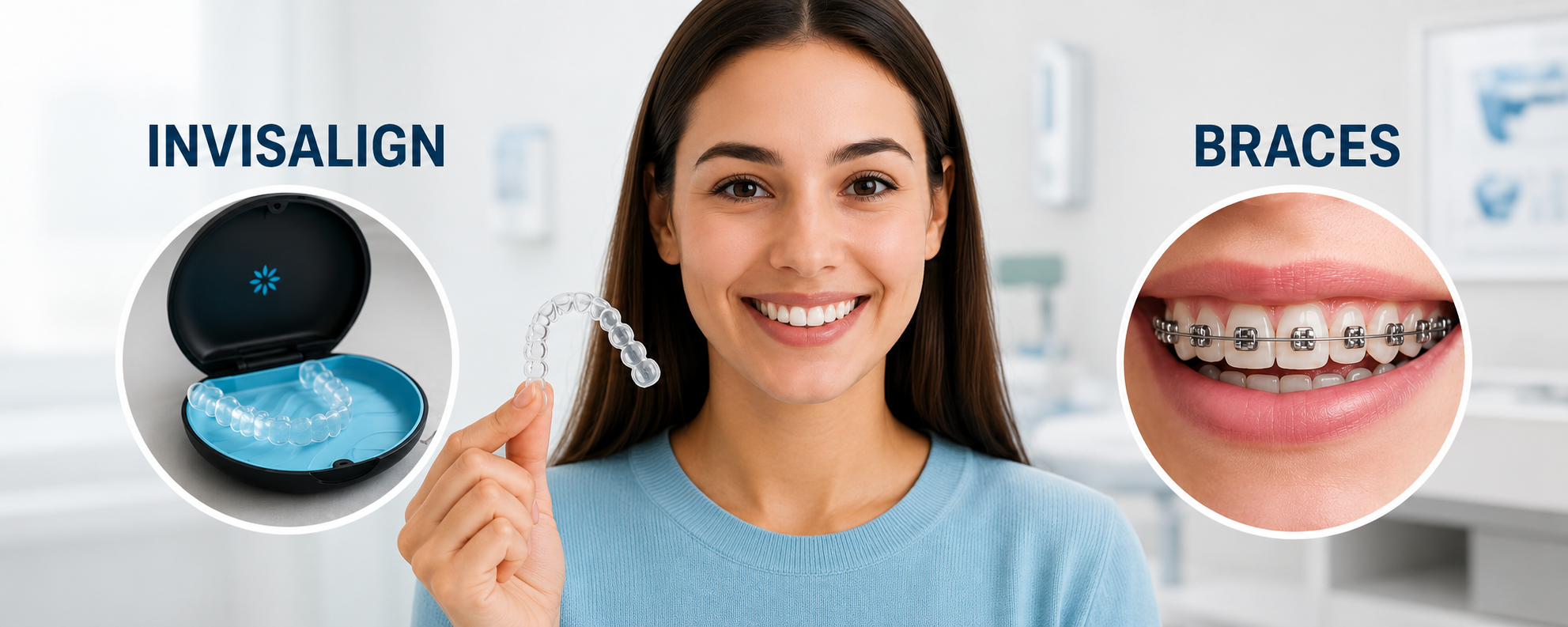
A straighter smile is not only about appearance. Proper tooth alignment can improve oral hygiene, reduce uneven enamel wear, support better bite function, and make it easier to maintain long-term dental health. If you are considering orthodontic care in 2026, you may be comparing two popular options: Invisalign and traditional braces.
Both treatments can correct misaligned teeth, crowding, spacing, and bite concerns. However, they work in different ways and suit different lifestyles. At Langley Dental Centre, our team helps patients understand their options so they can choose a treatment plan that supports both oral health and confidence.
What Is Invisalign?
Invisalign is an orthodontic system that uses a series of clear, removable aligners to gradually move teeth into better alignment. These aligners are custom-made to fit over your teeth and apply controlled force to guide tooth movement over time.
Many patients choose Invisalign aligners for teeth because they are discreet, removable, and easier to fit into daily routines compared with fixed brackets and wires.
Invisalign may help correct:
- Mild to moderate dental crowding
- Small gaps between teeth
- Minor bite irregularities
- Rotated or slightly shifted teeth
- Relapse after previous orthodontic treatment
Because aligners are removable, patients must wear them as recommended by the dentist to keep treatment progressing properly.
What Are Traditional Braces?
Traditional braces use brackets, archwires, and elastic components to move teeth into alignment. The brackets are bonded to the teeth, and the wire applies steady pressure to guide tooth movement.
Braces are often recommended for more complex orthodontic cases because they give the dentist greater control over tooth rotation, vertical movement, and bite correction. They may be used for significant crowding, severe spacing, overbite, underbite, crossbite, or complex malocclusion.
Although braces are more visible than clear aligners, they remain a reliable and effective option for many children, teens, and adults.
Invisalign vs Braces: Main Differences
1. Appearance
Invisalign is nearly invisible when worn, making it a popular choice for adults and teens who want a more discreet option. Braces are more noticeable because of the metal or ceramic brackets attached to the teeth.
For patients interested in cosmetic dental treatments, Invisalign may feel more comfortable socially and professionally because it has less impact on appearance during treatment.
2. Comfort
Both Invisalign and braces can cause mild pressure or soreness when teeth begin moving. This is a normal part of orthodontic treatment.
Invisalign aligners are smooth and do not use brackets or wires, so they may cause less irritation to the cheeks and lips. Braces may sometimes create soft tissue irritation, especially after adjustments, but orthodontic wax can help reduce discomfort.
3. Oral Hygiene
Oral hygiene is usually easier with Invisalign because the aligners can be removed before brushing and flossing. Patients can clean their teeth normally, which may reduce plaque buildup when hygiene habits are consistent.
With braces, food particles can become trapped around brackets and wires. This means patients need to be more careful with brushing, flossing, and interdental cleaning to reduce the risk of gingivitis, enamel demineralization, and tooth decay.
Regular routine dental check-ups are important during either treatment to monitor gum health, enamel condition, and overall oral hygiene.
4. Diet and Eating Habits
Invisalign aligners are removed before eating, so there are fewer food restrictions. Patients can usually continue eating their regular meals as long as they brush before putting aligners back in.
Braces require more caution. Sticky, hard, or crunchy foods can damage brackets or wires. Patients wearing braces may need to avoid items such as hard candies, popcorn kernels, chewing gum, and very crunchy snacks.
5. Treatment Responsibility
Invisalign requires patient discipline. Since the aligners are removable, they must be worn for the recommended number of hours each day. If aligners are not worn consistently, tooth movement may slow down or become less predictable.
Braces are fixed to the teeth, so they work continuously. This can be helpful for younger patients or anyone who may forget to wear removable aligners.
6. Treatment Complexity
Invisalign can be effective for many mild to moderate orthodontic concerns. However, traditional braces may be better for complex bite correction, severe crowding, significant tooth rotation, or cases requiring more advanced tooth movement.
A dental examination, bite assessment, and digital imaging can help determine which treatment is more suitable.
Who Is a Good Candidate for Invisalign?
You may be a good candidate for Invisalign treatment if you:
- Have mild to moderate crowding or spacing
- Want a discreet teeth-straightening option
- Can commit to wearing aligners consistently
- Have healthy teeth and gums
- Prefer removable aligners for eating and brushing
- Want an orthodontic option that fits a busy lifestyle
Before starting treatment, your dentist will check for active dental issues such as cavities, periodontal disease, gum inflammation, or enamel damage. These concerns should usually be addressed before orthodontic treatment begins.
Who May Benefit More from Braces?
Braces may be a better option if you have:
- Severe dental crowding
- Complex bite problems
- Significant tooth rotation
- Jaw alignment concerns
- Difficulty remembering to wear removable aligners
- A need for more controlled tooth movement
Braces can be especially useful in cases where precise movement is needed to correct the relationship between the upper and lower teeth.
Is Invisalign Faster Than Braces?
Treatment time depends on the complexity of the case, patient compliance, oral health, and the amount of tooth movement required. Some mild Invisalign cases may be completed faster than braces, while more complex cases may take longer or require braces for best results.
The most accurate way to estimate treatment length is through an orthodontic consultation with a dentist in Langley BC. Your dentist can examine your teeth, review your occlusion, and explain what to expect.
Can Adults Get Invisalign or Braces?
Yes. Orthodontic treatment is not only for children and teenagers. Many adults choose Invisalign or braces to correct crowding, spacing, shifting teeth, or bite concerns that were never treated earlier.
Adult orthodontic treatment may also be helpful before restorative or cosmetic procedures. For example, improving tooth alignment can sometimes create a better foundation for veneers, crowns, implants, or smile makeover treatments.
Invisalign and Oral Health Benefits
Straight teeth are often easier to clean. When teeth are crowded or overlapping, plaque and bacteria can collect in areas that are difficult to reach. Over time, this may increase the risk of cavities, gingival inflammation, periodontal pockets, and bad breath.
Correcting alignment may help improve:
- Tooth brushing and flossing access
- Gum health
- Bite balance
- Chewing efficiency
- Speech clarity in some cases
- Long-term enamel protection
- Confidence when smiling
Orthodontic care is not only cosmetic. It can support both function and preventive dental health.
How to Choose the Right Option in 2026
When comparing Invisalign and braces, think about your lifestyle, treatment goals, oral health condition, and the complexity of your bite. Invisalign may be ideal if you want a discreet and removable option. Braces may be better if your case requires more advanced correction.
During your consultation, your dentist may evaluate:
- Tooth alignment
- Bite relationship
- Jaw position
- Gum health
- Bone support
- Tooth wear patterns
- Oral hygiene habits
- Cosmetic goals
- Treatment expectations
This helps create a personalized plan instead of a one-size-fits-all recommendation.
Final Thoughts
Invisalign and braces are both effective teeth-straightening options, but the right choice depends on your dental needs and lifestyle. Invisalign offers a clear, removable, and discreet approach, while braces provide strong control for more complex orthodontic cases.
If you are considering Invisalign treatment or want to learn whether braces may be a better fit, Langley Dental Centre can help you make an informed decision. Our team provides patient-focused care and personalized treatment planning to support a healthier, straighter, more confident smile.
To get started, book a consultation with Langley Dental Centre and explore the orthodontic option that is right for you in 2026.